Thanks, everyone, for the suggestions. That gives me a few things to try.
I don't remember where I came across this but nose oil.
If anyone paid attention to me racing they could have seen me wipe the side of my nose between heats and wipe the controller wiper board with the same finger. It worked for me.
Nose oil/nose wax sounds gross, but, believe it or not, I've also heard of skin oil recommended as a lubricant for the back of a guitar neck, so maybe not a bad thing. LOL.
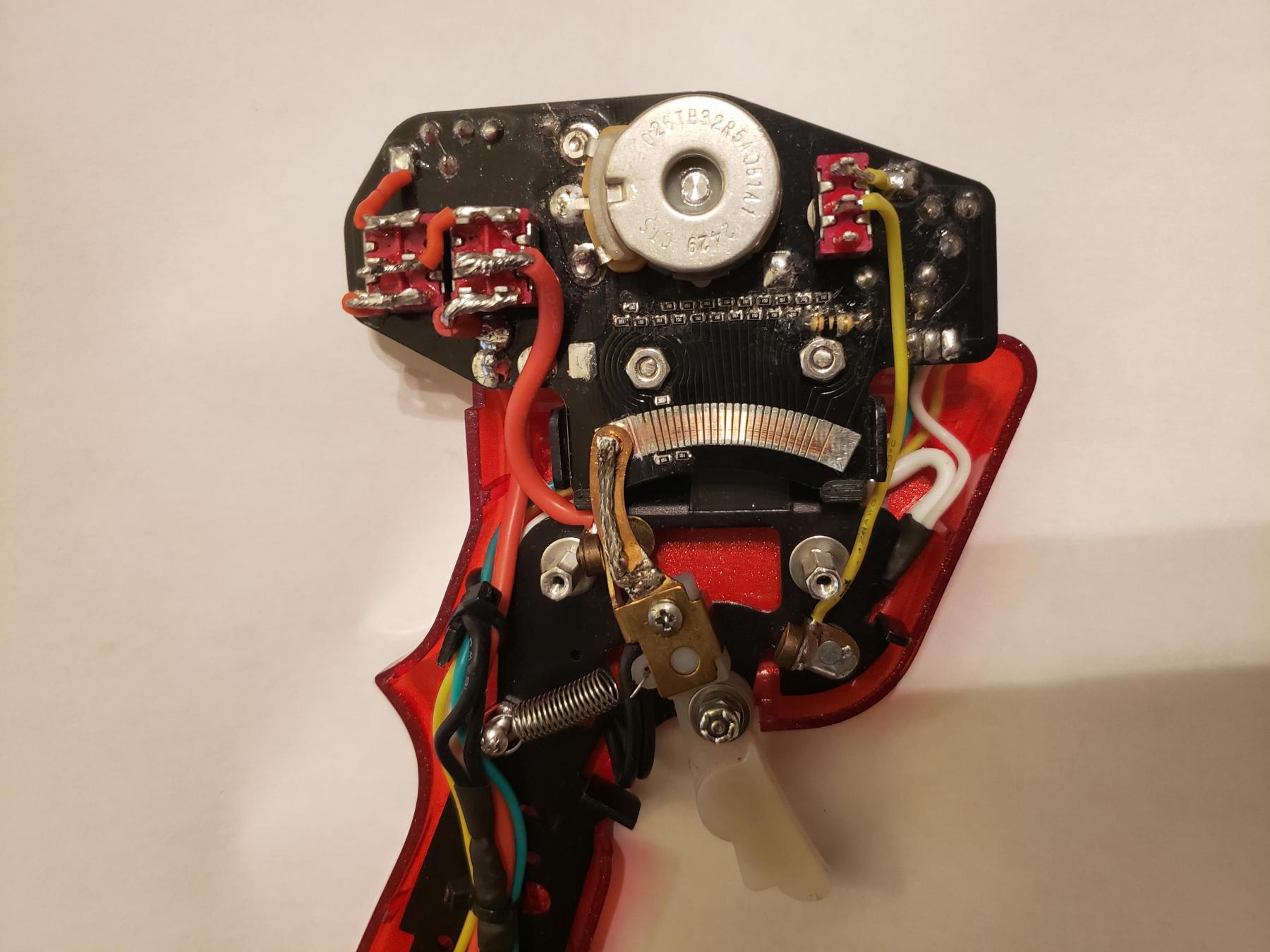
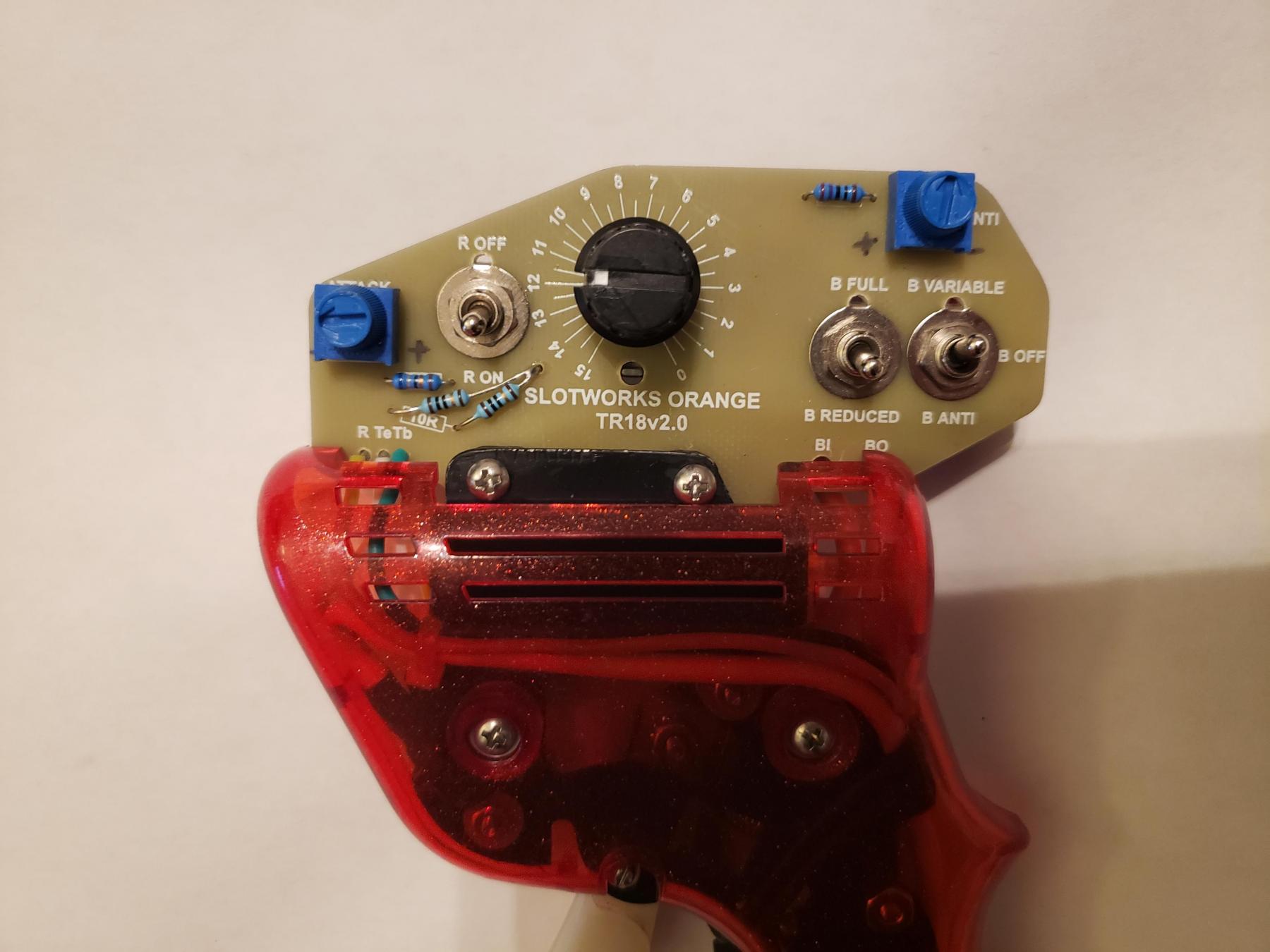
I do try to keep my wiper boards and buttons clean, and as flat as possible to the wiper board. I have also used very fine (1000-1500 grit) sandpaper to polish the face of the wiper button, as the two Mikes suggested. Maybe I need more practice at getting everything perfectly clean, polished, and straight, but a dry wiper board always seems to feel a little rough to me. Maybe I just need to adjust what I perceive as rough? The controller is built out of a Parma Turbo frame. When I initially built it, I used the original Parma wiper button, and I think it felt ok dry, but I changed it after the shorting started. I've tried a couple of different buttons, and have an MB Slot brass button that I've rounded a bit more than the way they come on it now
I built my own controller, based on the JG controller where I use veroboard and it has been in use for over 15 years.
The only lubricant I have ever used, is a soft lead pencil wiped over the contact path.
Graphite powder will do the same thing.
I was thinking of dry lubricants, since something that leaves the surface wet will obviously attract dirt, and thought of graphite lube, as used for automotive lock cylinders (I'm an automotive tech by day), but Google says that graphite is electrically conductive, which might end up doing the same thing as the residue.
I hadn't thought of a penetrating oil, like Tri-Flow, or bearing oil.
Jason, if you are having so much trouble with getting a mild short between your wiper bands then the problem is the extremely high ohm resistors that are probably needed on that PNP design. Creating a mild short between bands with high ohm resistors is going to show up much easier than on my controllers which are generally only 5.6 ohms for 1/24 models. What ohm resistors are on each band? A motor brush is a lot softer than a Parma button and will possibly deposit more residue.
PNP transistors are more expensive, have fewer types and are harder to find availability so I do not understand the fascination with them by some.
Thanks, Jim, you may well be right. I used a PNP Darlington transistor. The wiper board has 24 bands, and I used values in the range that James Cleave recommended, 15 ohm, I believe. My multimeter reads 380 ohms across the entire network. I had similar thoughts about the motor brush, but I know that people do it, and that's what James recommends, so I figured it might be worth a try, for science. Will those values show up a mild short on both a PNP and NPN design, or is a PNP specifically more susceptible?
I got several of the wiper boards from James, as a way to build a few controllers on Parma frames. The instructions that he included for the way he builds them were for a PNP circuit, and I decided to try it, again, for science. I know the Brits seem to love PNP transistors, and I do some of the controller repairs for my local raceway, so I figured it might be worth an experiment, to get a little more familiar with the circuit, if nothing else, in the unlikely event that I have to work on one. To be honest, though, I'd agree with you about them. Maybe it's partly because I'm more familiar with an NPN circuit (my first electronic controller was one of yours), but it makes more sense to me, so I doubt I'll be repeating the PNP experiment, and this one may end up getting rewired as an NPN.