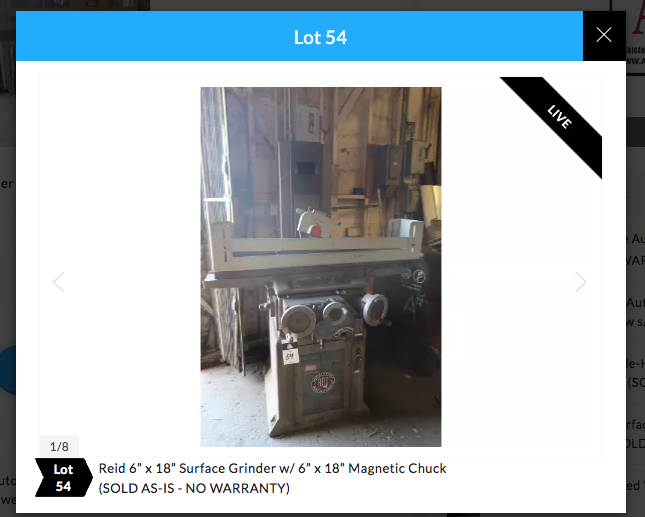
It's true: cheap machinery is often cheap for a reason, especially auction machines. In the case of that surface grinder $75 was a good buy. It is a new enough machine to have parts that would be desirable for people rebuilding a similar (Reid) machine, at least.
I have a Bridgeport (a *REAL* one, not Harig-branded) surface grinder. It's very unique, machinery guys, when they see it, freak out because it's so rare... back to my point: I bought the machine at auction back in the 80s and if you were to perform a precision-audit on it it would most likely fail badly. Very badly. However, for the small tools ground on it (generally 1/2" or smaller) it does its job well. I wasn't looking for tenths of thousandths over 18" (it's a 6 x 18 machine). When I needed it to take off .0001" on a part it did it.... but the part wasn't very long.
The $75 grinder was pretty grungy and looked like it (the whole shop looked like...) it wasn't used for a long time. Like I said previously, there's a type of dust/grunge that settles on machinery that sits for a long time...the grinder didn't have excessive backlash on the slides, the motions were smooth lock-to-lock, and the spindle spun smoothly but it was going to need a long hot cleaning session...
As for old machinery, pre-WWII (<--- that's not an eleven!) iron is considered by many rebuilders to be the best. It's supposed to be more stable, have better wear, be more massive and scrape better than post-WWII (<---again, not an eleven!) iron.