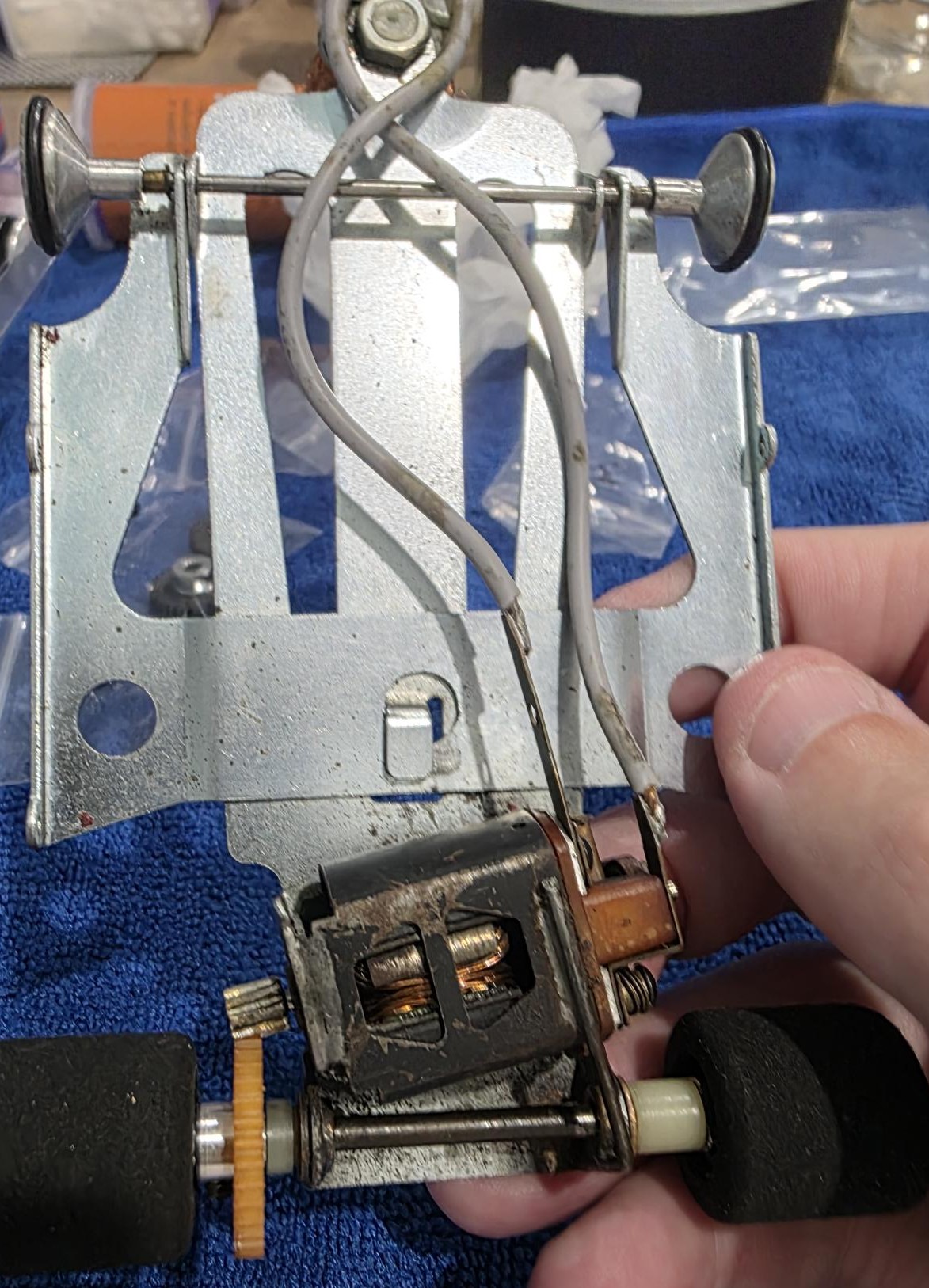
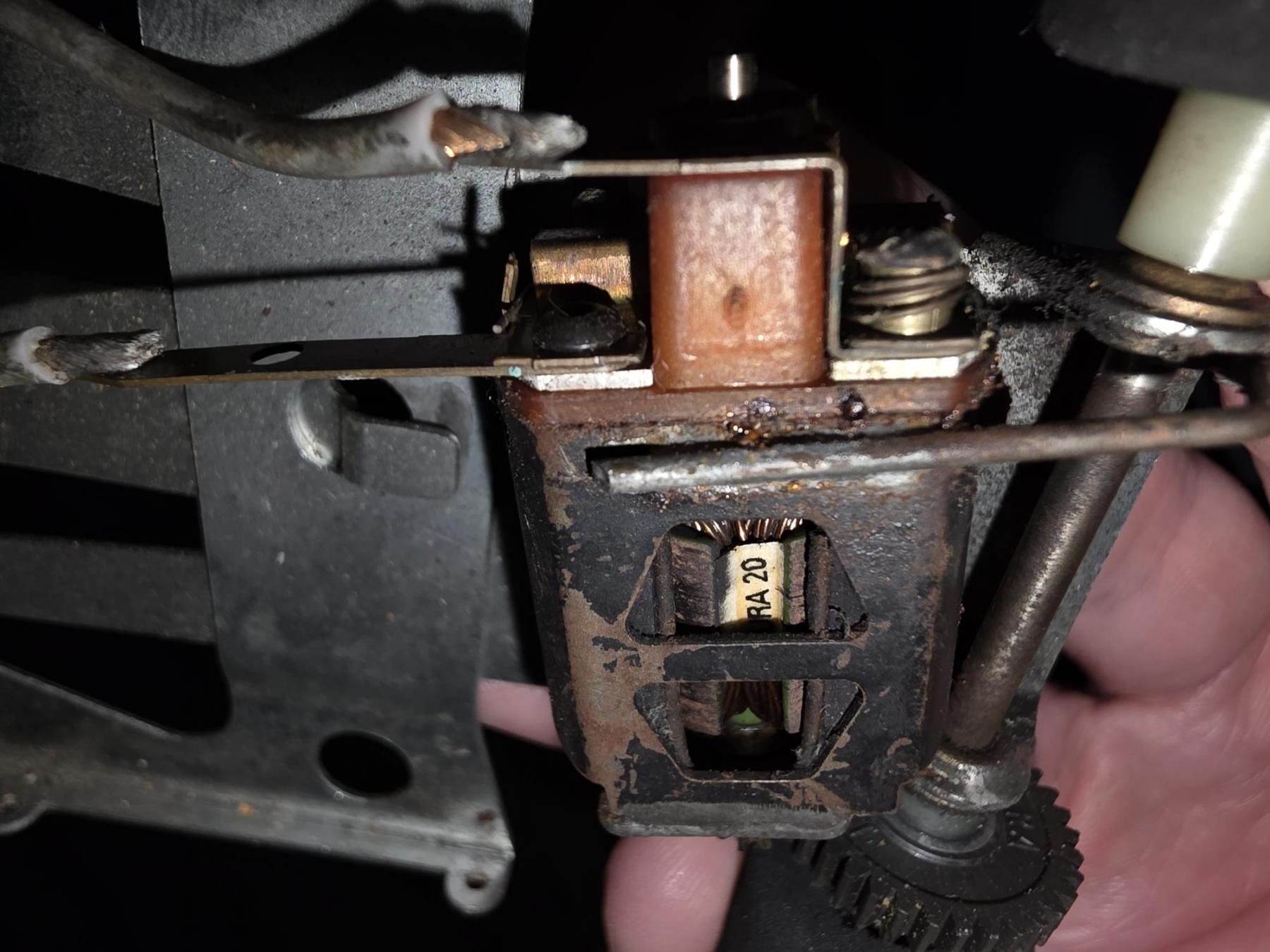
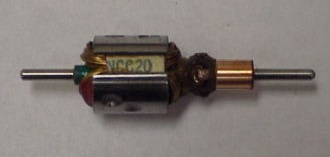
This Mura can design arrived very late 80's or early 90's. I remember them from the early 90's and later. There was another Mura can between this one and the 2-hole can that had smaller rectangular holes at each end with 2 slots in the middle. This is an earlier endbell before double-overhead brush springs and is also about 1/8" longer than the double-overhead endbell. If memory serves me, not all Mura arm tags had their brand identified, but later 15 and 20 arms did. I've never seen a Mura C-can arm identified as "NCC". Motors at the time of NCC were 16D, though 16D and C-can arms are similar dimensions and sometimes interchangeable especially with the pre-double-overhead springs longer endbell which is the same length as a 16D endbell.
I still have a Mura G27 arm from 1980 as well as several other Mura arms from the 80's. These have survived quite well with only general cleaning and service and still run well without ever having been reconditioned (trued and balanced). From observation, Mura didn't keep up with the USRA minimum stack lengths as did ProSlot, Camen, and Koford, and I haven't found a single one of my Mura C-can arms that was built to the minimum stack length. My shortest G20 arm has a .460 stack while others range in length up to .495 and would never be competitive with a .440 stack arm. G15 arms are similar. The USRA minimum length for a G12 arm is .350, and my Mura 12 arms run .375 to .390 and again aren't competitive to another brand arm.
The chassis is most certainly the original Parma Flexi as already identified. Parma delivered the Flexi with 16D motors, so a C-can is not an production issue, though many local and regional racing classes used other motors in combo with the Flexi chassis.