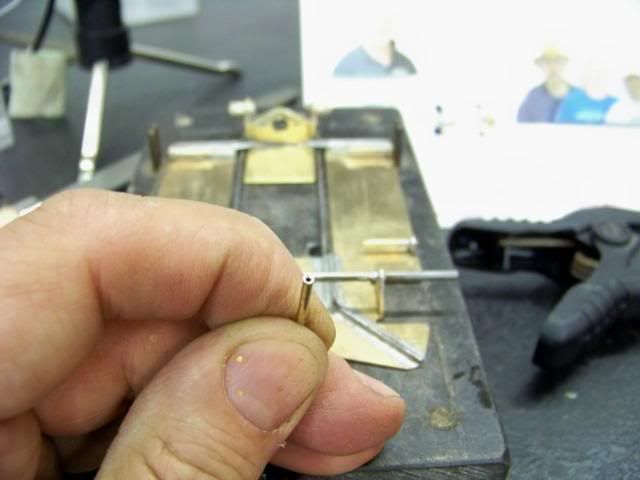
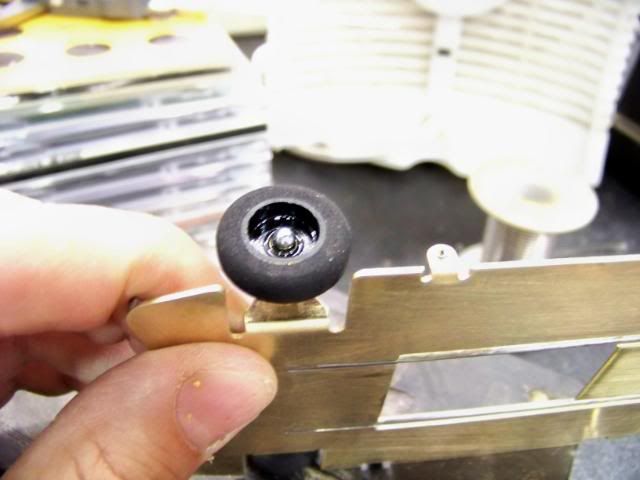
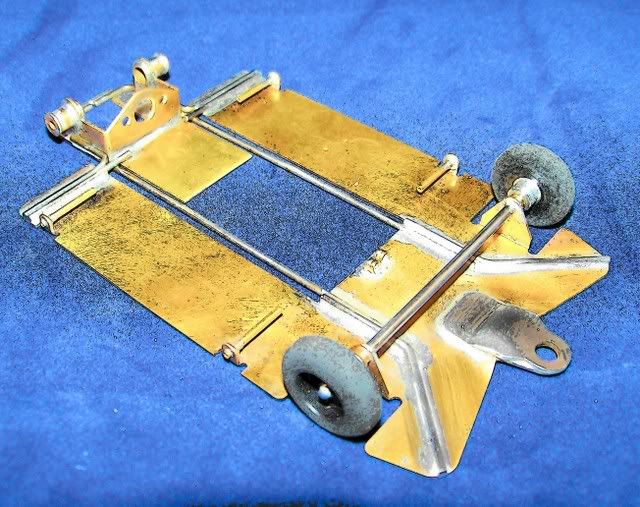
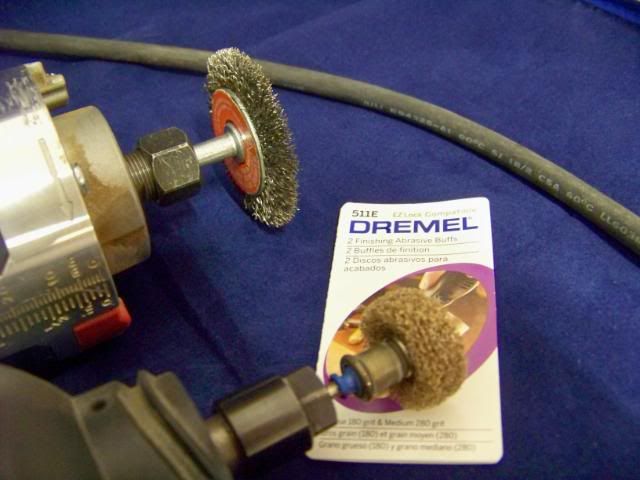
Here's an alternative to the large diameter wire brush: a Dremel M511E buff on their EZ-Lock mandrel.
Advantages are:
A safer, smaller diameter.
Less painful on my forehead when it starts to degrade.
Disadvantages are:
Much higher cost. About $4 for two pieces (one each of 180 and 280 grit).
Degrades easily when catching an edge.
Shown is the 280 grit, which I prefer. It removes solder much quicker than the 180.
These also work great as an (almost) heat-free alternative to an iron for removing excess solder from any slot car motor can.
The level of finish is a matter of personal preference and won't affect track performance (assuming your solder joints have adequate integrity).
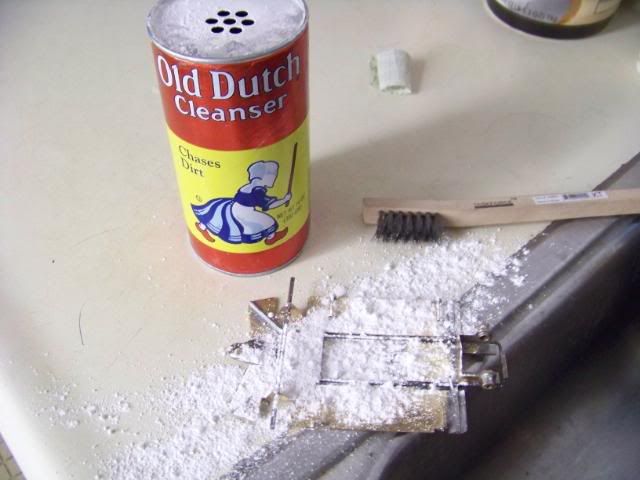
I prefer a chassis like "Sano" Dave Fiedler builds. Nice, strong joints but not afraid to show some solder. They may have as much as 5/16" of solder showing where he ran the whole width of the iron tip across the brass for maximum heat transfer. He cleans them up with just kitchen cleanser and a wire brush. IMHO, they look like a race car that will be run hard, which he obviously does.
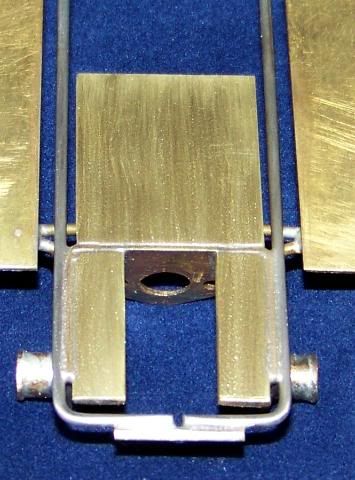
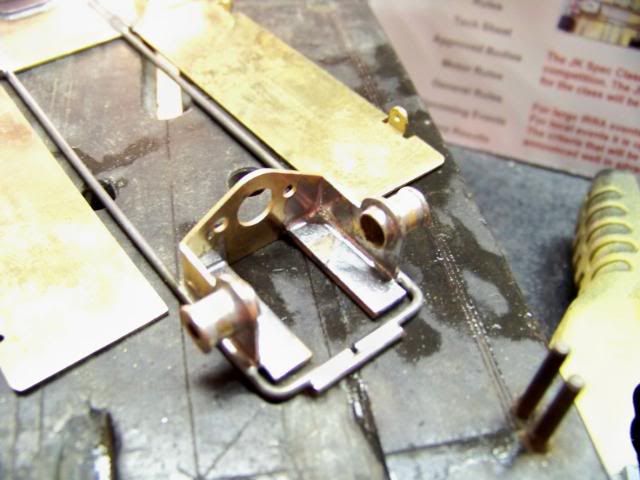
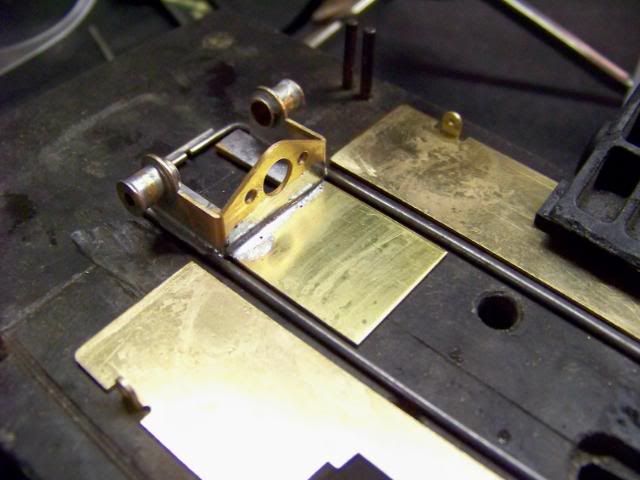
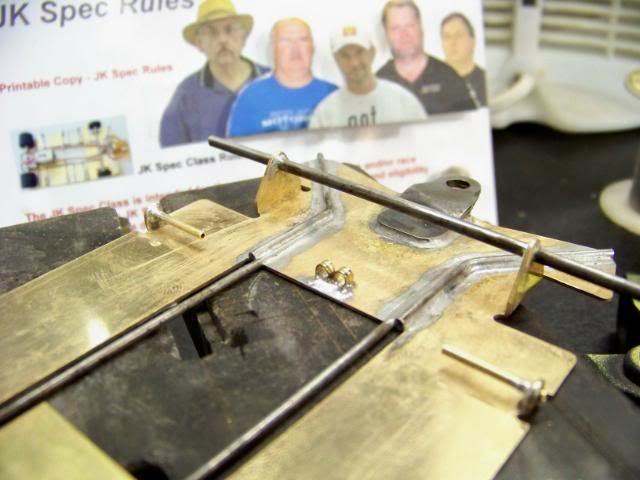
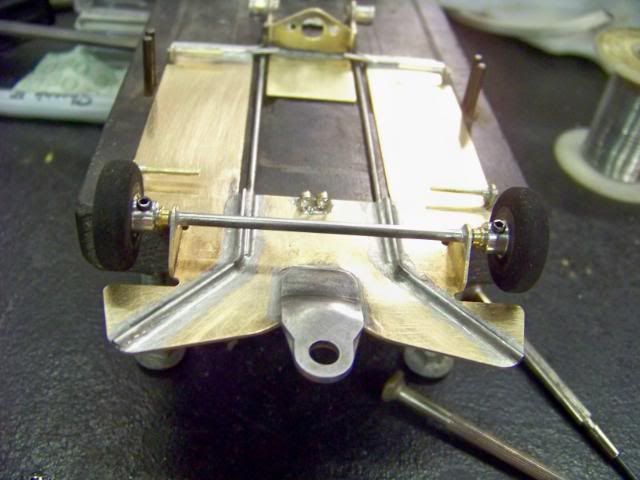
The other end of the spectrum are chassis that look like jewelry. Shown is one of the ear joints with about 10 seconds of polishing with the 511E buffs. I left a fair amount of solder on, but if you're willing to blow through a bunch of buffs, you can eventually make it appear like the wire was glued on (which would be weaker).
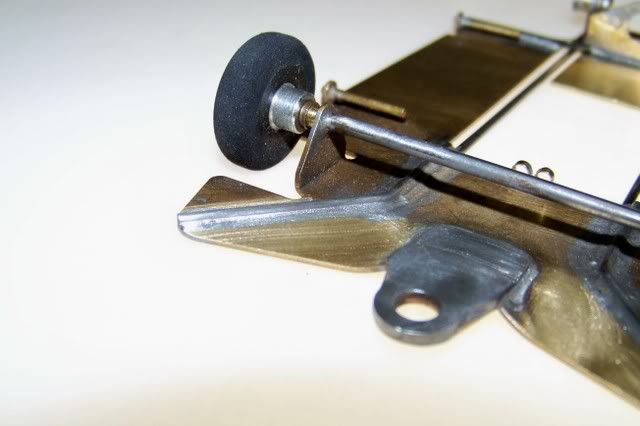
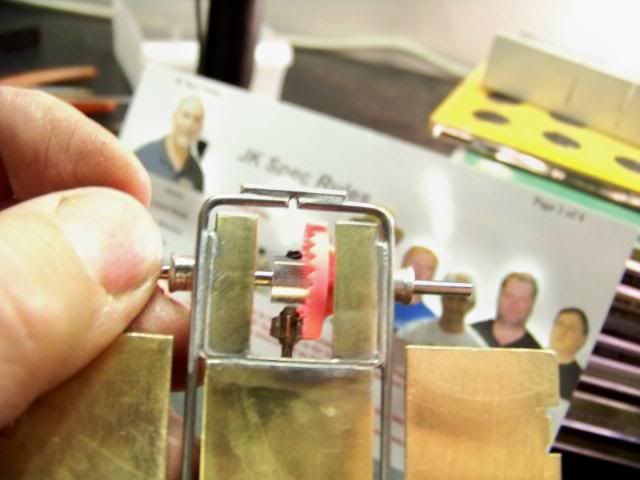
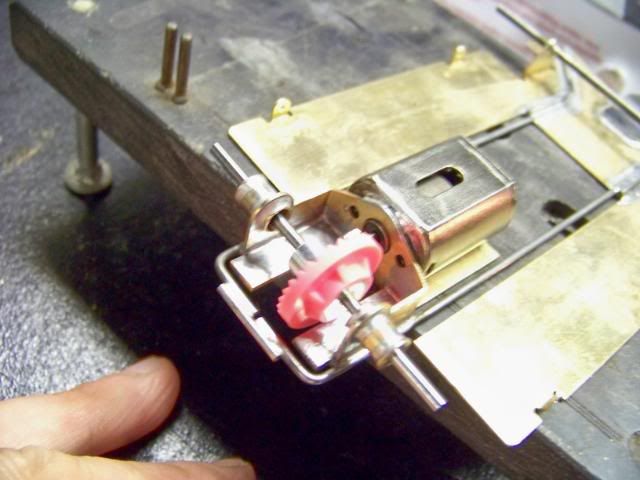
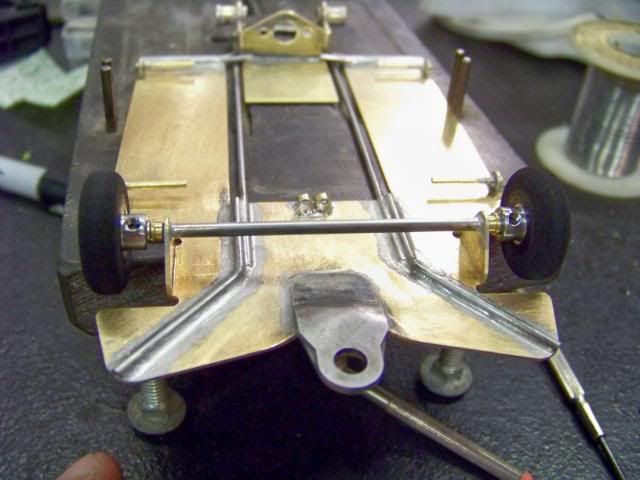
Another view with a little less glare. Uh oh, I notice a bit of rust in the middle of the axle. Before I go take care of it, I will warn you, that will be your typical trouble spot on Retro chassis. A long span of unplated, untinned steel that was at some point exposed to "Acid Flux Mayhem". (I think that was the name of the band that I saw open up for The Clash in 1979

)
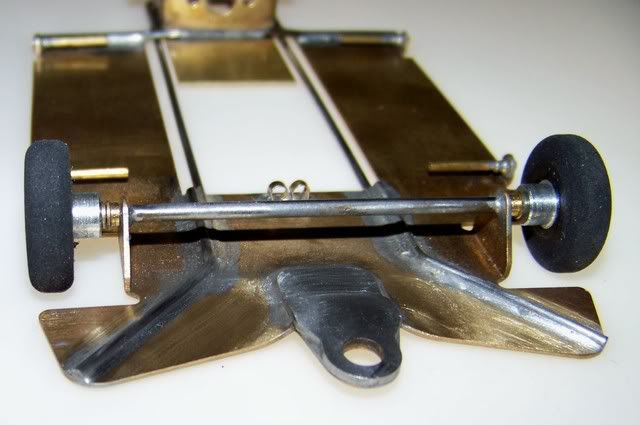
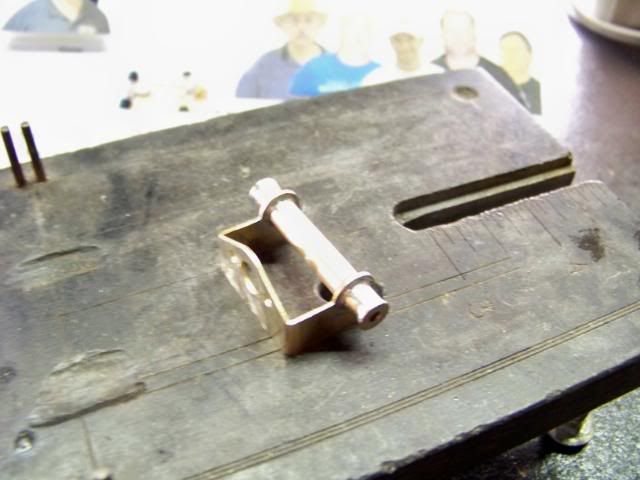
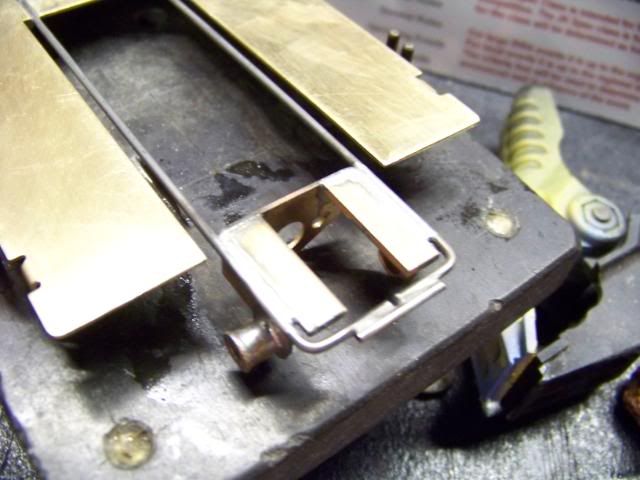
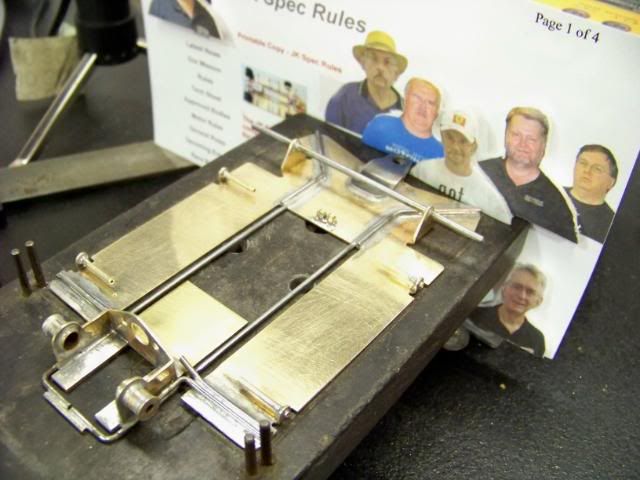
The weight/bracket area after a bit of buffing. Add 30-micron paper, a tumbler, and some polishing rouge and and "Mini-Greg Wells" of the IRRA Go7 could probably use it to shave.