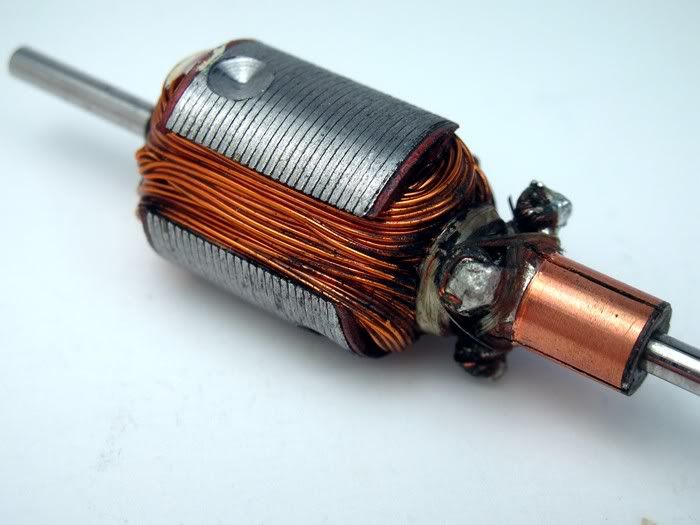
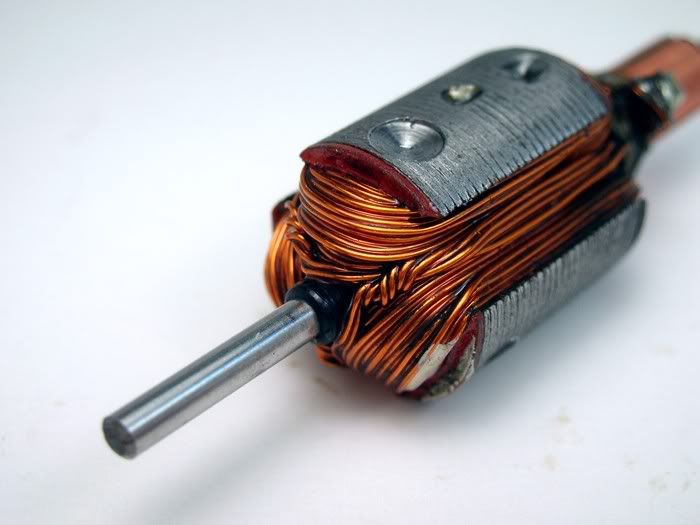
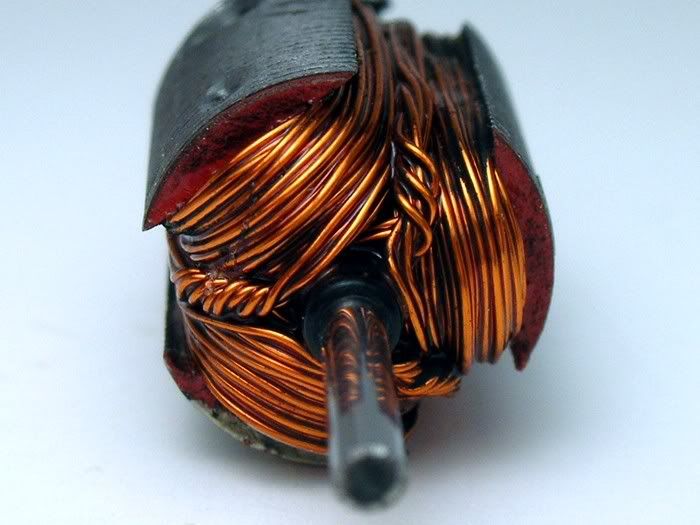
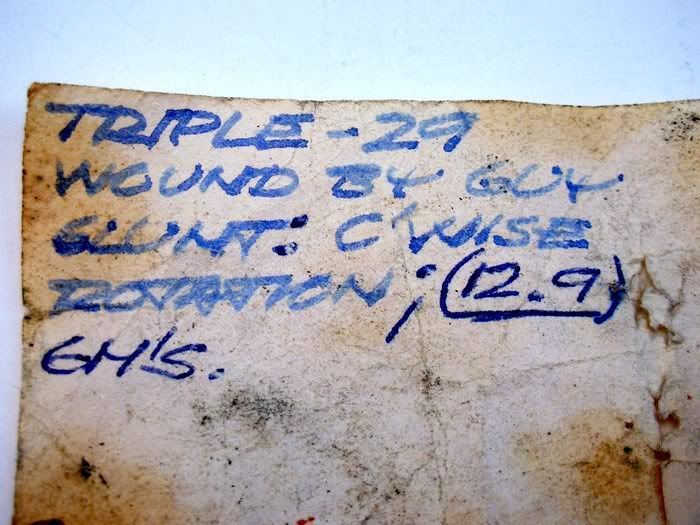
Hi Rocky
John, tripples arent any more difficult than a double. As usual, I am not sure there is a performance advantage, but it does allow a few more TURNS because of the ability to seat the wire. In the day I did a number of very good 32 tripples.
(!) I would definitely not agree with that and would for sure like to see some triples you've done! Doubles are "harder" than singles because of trying to keep the winds neat...and neatness DOES count. By that reasoning, keeping a triple neat would definitely be more difficult than a double, even though I don't think I ever did one. If you mean by "not harder" they use the same basic winding technique...I guess so, but then a quintuple wind wouldn't be any harder than single

The point about winds versus turns, is that you do it by length and work to get the turns the same. The reverse made it too easy to get it wrong. Some years ago doing autopsies on blown Parma "death star" arms, found a lot of them with 70 to 73 turns of 30s wire, all the same length. Quality control was lacking.
That those arms were blowing with the same length wire on each pole but with up to 3 turns difference, only underscores what I'm saying. Anyway, maybe you do it that way...but I don't and the people I learned from didn't.
The winding pattern is GOD...if you're meticulous about your patterns and repeating them, the length will fall into place within acceptable limits every time. Even if your pattern falls apart on the last few turns, which is where it usually will, the length difference will be
physically tiny and
electrically invisible. You start at the first pole and match your patterns with one unbroken piece of wire ending at the first pole all over again. If you're diligent, you can take apart the arm afterwards and the lengths will be "right there".
Again, small differences in length don't matter...and not just a quarter inch either.
The "coils" (turns) on each pole DO matter though. Where this often comes into play is on the last pole of a 3 pole arm. Frequently, this pole will have a longer length of wire on it on a really full arm
(even with squishing the wire on there with a popsickle stick) because the wire will somewhat overlap the first two a little on the sides...and it doesn't really "matter" in the end "IF" the number of turns are the same. Ideally, what you want is the same number of turns and the same exact length of wire on each pole, but practically speaking this often isn't possible and striving for it will ultimately be a wasted effort. Now I'm not an electrical engineer with an education DC motor design (who here is?), but I've seen this all work. Different strokes.
You are correct, a quarter inch doesn't matter, but a turn can be over an inch wrong.
!?exactly...which is why I say
"patterns are king" and
"don't lose count". 
But we're wrecking Rick's beautiful build thread here, so I won't add any more OT here.
-john